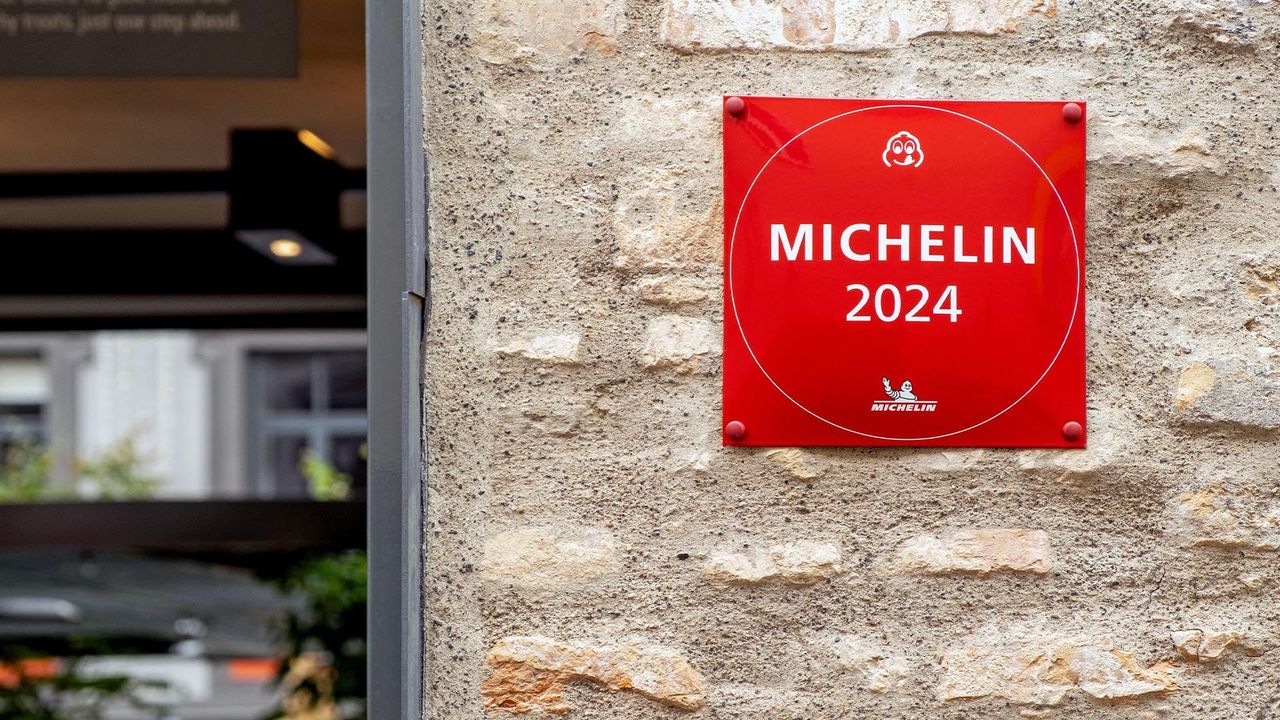

There are events which, when observed superficially, appear to be the product of chance or of a marginal intuition, but which, under closer scrutiny, reveal themselves as fully fledged treatises on cultural and communicative strategy, cleverly disguised as simple historical anecdotes.
The birth of the Michelin Guide unquestionably belongs to this category. It did not emerge from an early gastronomic ritual, nor from an embryonic aesthetic of taste; rather, it arose from a starkly pragmatic necessity: to increase the sale of tires in a historical context in which mobility was still a rare and uncertain privilege.
In contemporary terms, one might say that the market of the time was not resistant to the product, but largely unaware of the deeper reason why it should have started moving at all.
At the beginning of the twentieth century, the automobile was an elite object, road infrastructure was rudimentary, and traveling by car took on the character of a near-exploratory enterprise—let’s be honest, these were not roads, but glorified stables strewn with particularly vindictive pebbles.
Michelin manufactured tires of outstanding quality, but excellence, when isolated, does not generate scale nor demand. It is precisely at this juncture that a move of astonishing modernity takes shape: instead of insisting on direct promotion of the product, the company chose to build the very context of its use.
Translated plainly: it found the perfect solution to its own problem—a solution that happened to coincide perfectly with the problem faced by people themselves. Michelin did not encourage consumers to buy tires; it encouraged them to travel. And once travel became desirable and feasible, the product followed naturally, almost inevitably. This was a growth strategy ante litteram, founded not on persuasion, but on the structuring of behavior.
The first Michelin Guide, unsurprisingly, was not a gastronomic compendium. It was a functional repertory: distances, maps, repair shops, hotels, stopping points. A navigational device that transformed the uncertainty of movement into a possible experience.
If we were to apply contemporary terminology, we might describe it as a perfectly engineered cognitive funnel: utility as the entry threshold, experience as the consolidation phase, and technical need as the final destination. First tangible value, then economic return. A pedagogy of consumption rather than a sales pitch.
In the 1920s, a decisive shift occurs. The guide becomes a paid publication, marking the transition from an informational tool to a cultural object endowed with symbolic authority. Free value educates; economically recognized value positions.
Michelin ceases merely to indicate and assumes the role of judge. From an informational platform it becomes an evaluative institution. In 1926 the first star appears; in 1931 the system is articulated; in 1936 the criteria are formally codified. No superfluous rhetoric, no narrative self-indulgence. Only method.
The Michelin star is not a review in the ordinary sense of the term: it is a verdict. Impersonal, austere, devoid of emotional concessions. It does not reward intention, does not celebrate effort, does not allow itself to be seduced by theatrical staging.
It recognizes only the result. Herein lies its symbolic strength and its enduring relevance: authority is not something one claims, but a condition one builds over time. Michelin does not aspire to be loved; it aspires to be believed. And it is precisely for this reason that it is.
Crowning this conceptual architecture is a radical choice: the anonymity of the inspectors. No faces, no credentials, no signatures.
The judgment matters more than the judge. In an era dominated by personal exposure and the rhetoric of the ego, this option appears almost counterintuitive, if not openly heretical. And yet it works, because when content is structurally sound, narration can afford silence.
The resulting paradox is among the most elegant of modern communicative strategies: a guide conceived to increase tire sales becomes the global oracle of fine dining. It directs tourist flows, shapes local economies, determines professional destinies. And it does so without betraying its original mission.
Michelin, in essence, has never ceased pursuing the same objective: activating movement. Those who eat well travel; those who travel consume; those who consume generate narrative. A self-reinforcing circuit of extraordinary effectiveness.
It can therefore be said that the Michelin Guide is not merely a gastronomic repertory, but a paradigmatic case of lateral thinking, cultural positioning, and the construction of authority. It demonstrates that true innovations do not arise at the center of the collective field of vision, but at its margins, and that the most profound ideas rarely need to raise their voice: they operate, and precisely for this reason they become the principal agents of a story that time will struggle to forget.
Michelin, after all, has never ordered the world to eat better. It has simply—and methodically—suggested, with discreet precision, that it go farther. And when the path is well designed, the market, like history itself, follows accordingly.